

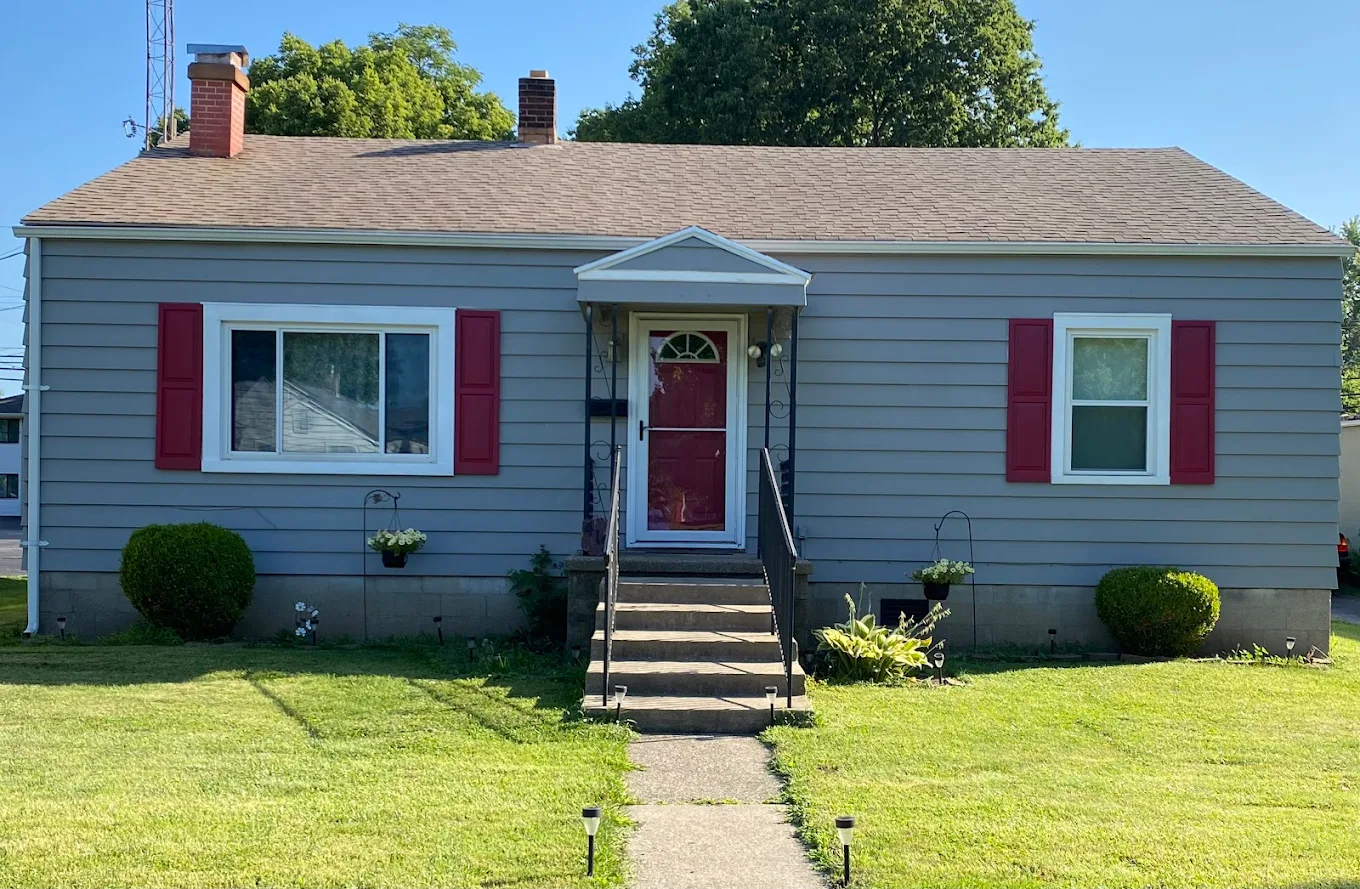
A roof emergency rarely arrives at a convenient hour. A storm rolls through Warren County overnight, a limb comes down, and by morning there's water tracking across a bedroom ceiling. What you do in the first few hours has a real effect on how much damage you end up paying for.
First: make the house safe
Before anything else, deal with the immediate hazards inside.
- Kill power to affected rooms. Water and light fixtures or outlets are a genuine electrocution risk. If water is running near anything electrical, shut that circuit off at the panel.
- Move what you can. Furniture, electronics, rugs, anything with sentimental value — get it out from under the leak.
- Catch the water. Buckets under the drip, towels around the base. If a ceiling is bulging and holding water, a small hole poked at the lowest point of the bulge will drain it in a controlled way. It feels wrong, but a controlled drain beats a ceiling collapsing.
- Stay off the roof. Wet shingles, storm debris, and possible structural damage make climbing up the single worst decision available. Every year people are seriously hurt doing exactly this.
Document before you clean up
Photograph everything while it's still wet and visible. Interior water stains, soaked insulation, damaged belongings, anything visible from the ground outside, and debris in the yard. Timestamped photos are the difference between a smooth insurance claim and an argument about whether the damage was pre-existing.
Keep receipts for anything you buy to limit damage — tarps, buckets, a shop vac, a hotel room if the house isn't habitable. Most policies reimburse reasonable mitigation costs, but only if you can prove them.
Then call a roofer, and be specific
When you call, describe what you're seeing rather than guessing at the cause. Where is the water appearing? Is it dripping steadily or only during rain? Did anything hit the roof? Is there visible damage from the ground? That detail lets us bring the right materials on the first trip.
At Mastercraft Restorations we keep emergency tarping capacity available for Lebanon and the surrounding Warren County communities. A properly installed tarp is not a repair — it's a dam that buys you time to get the actual work scoped, scheduled and, where relevant, approved by your insurer. Done right, it holds through the next storm.
What we look for once we're on site
Water almost never enters where it appears inside. It runs along decking and rafters before it finds a spot to drop through, so the stain on your ceiling can be several feet from the actual breach. A proper emergency assessment traces it back:
- Lifted, cracked or missing shingles, particularly along ridges and edges where wind gets underneath
- Failed flashing around chimneys, vents, skylights and wall junctions — the most common leak source on an otherwise sound roof
- Impact damage from hail or debris, including bruising that isn't obvious from the ground
- Ice dam damage along eaves, which shows up after a freeze-thaw cycle rather than during the storm itself
- Soft or spongy decking, which indicates the water has been getting in longer than you realised
Why the clock actually matters
Water damage compounds. Saturated insulation stops insulating and stays wet for weeks. Wet drywall loses structural integrity. Mold can establish within 24 to 48 hours in the right conditions, and remediation costs far more than the roof repair that would have prevented it. Decking that stays damp will rot, turning a shingle repair into a partial tear-off.
Ohio's freeze-thaw cycles make this worse. Water that gets into a small gap in November expands when it freezes, widening the gap, then melts and penetrates further. A minor breach in late autumn can become a significant structural problem by spring.
Insurance, briefly
Sudden storm damage is usually covered. Damage from deferred maintenance usually isn't, which is why documentation and a prompt professional assessment matter so much — they establish that the damage was sudden.
We handle claim paperwork routinely and will meet your adjuster on site if that helps. Bring us your carrier's name when you call and we'll work to their documentation requirements from the start rather than redoing it later.
If you're dealing with this now
Call (513) 446-8017. Tell us what you're seeing and where you are. If it's an active leak we'll prioritise getting you tarped and dry, then scope the permanent repair once the weather allows a proper look.
And if it turns out the damage is minor and the roof has years left in it, we'll tell you that too. We'd rather give you an honest answer than sell you a roof you don't need.
